
Introduction
For many years, Alport syndrome was considered a very rare condition affecting a relatively small number of people.
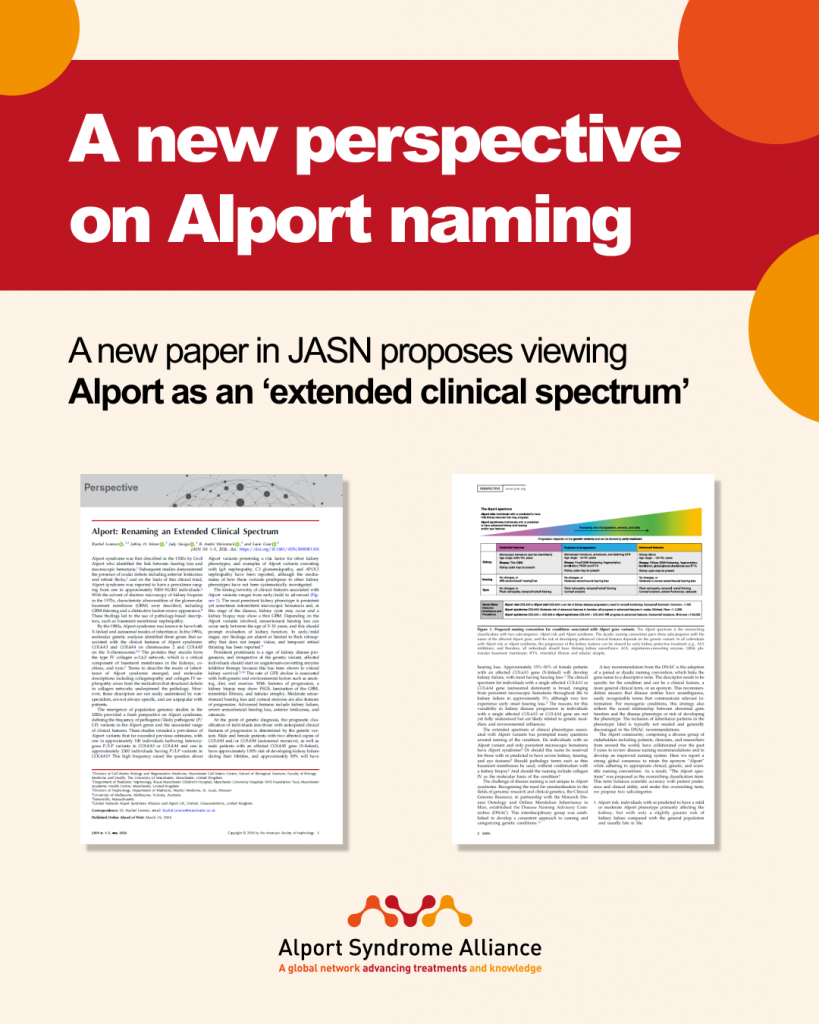
A new perspective published in the Journal of the American Society of Nephrology (JASN) challenges this view. It proposes viewing Alport as an ‘extended clinical spectrum’, introducing, amongst other things, a key distinction between ‘Alport risk’ and ‘Alport syndrome’.
In this short blogpost, we share the most important highlights of the new perspective.
Main takeaways
- Alport affects far more people than previously thought
- New distinction: ‘Alport risk’ vs ‘Alport syndrome’
- Earlier diagnosis may improve access to treatment
- Early treatment may slow kidney disease progression
- Alport experiences can range from mild to severe
- COL4A3, COL4A4, and COL4A5 are collectively classified as ‘Alport genes’
- Those with Alport risk only have a slightly higher incidence of kidney failure than the general population
5 focus points
1) An extended clinical spectrum
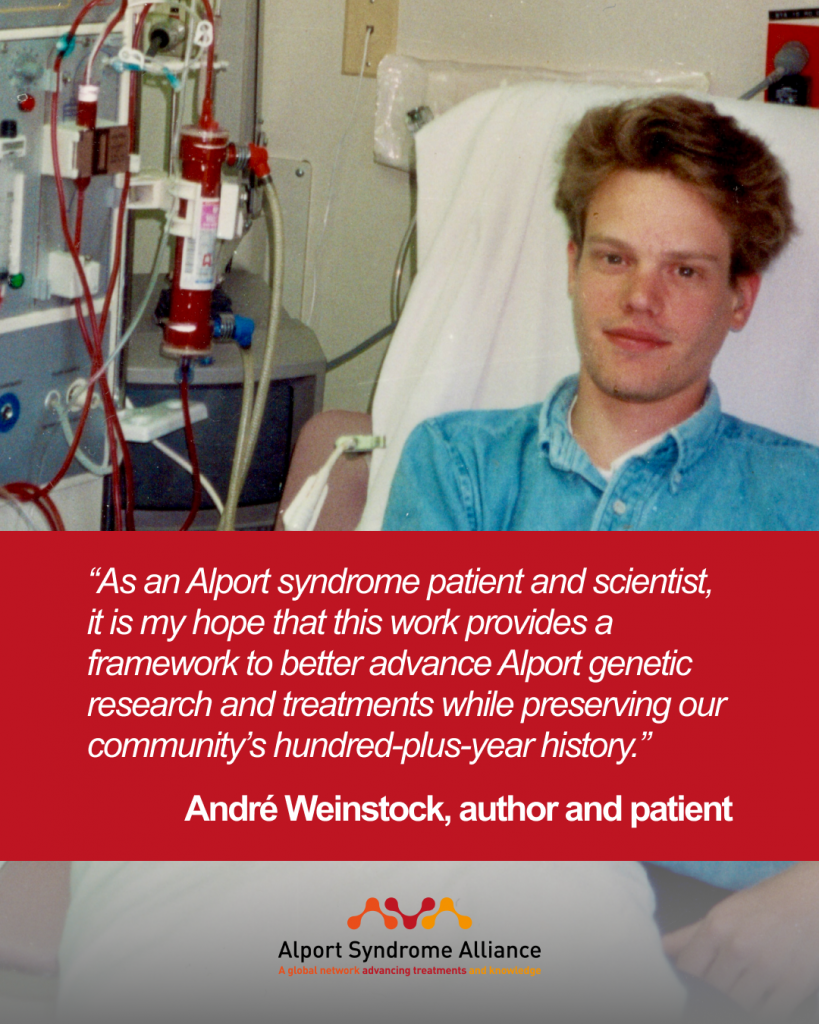
The paper proposes a broader way to understand Alport, thinking about it as
an ‘extended clinical spectrum’.
This means that people can have very different outcomes. Some people may only have mild kidney changes or a little blood in the urine throughout life.
Others may develop severe kidney disease, hearing loss, and eye changes.
2) Alport risk VS syndrome
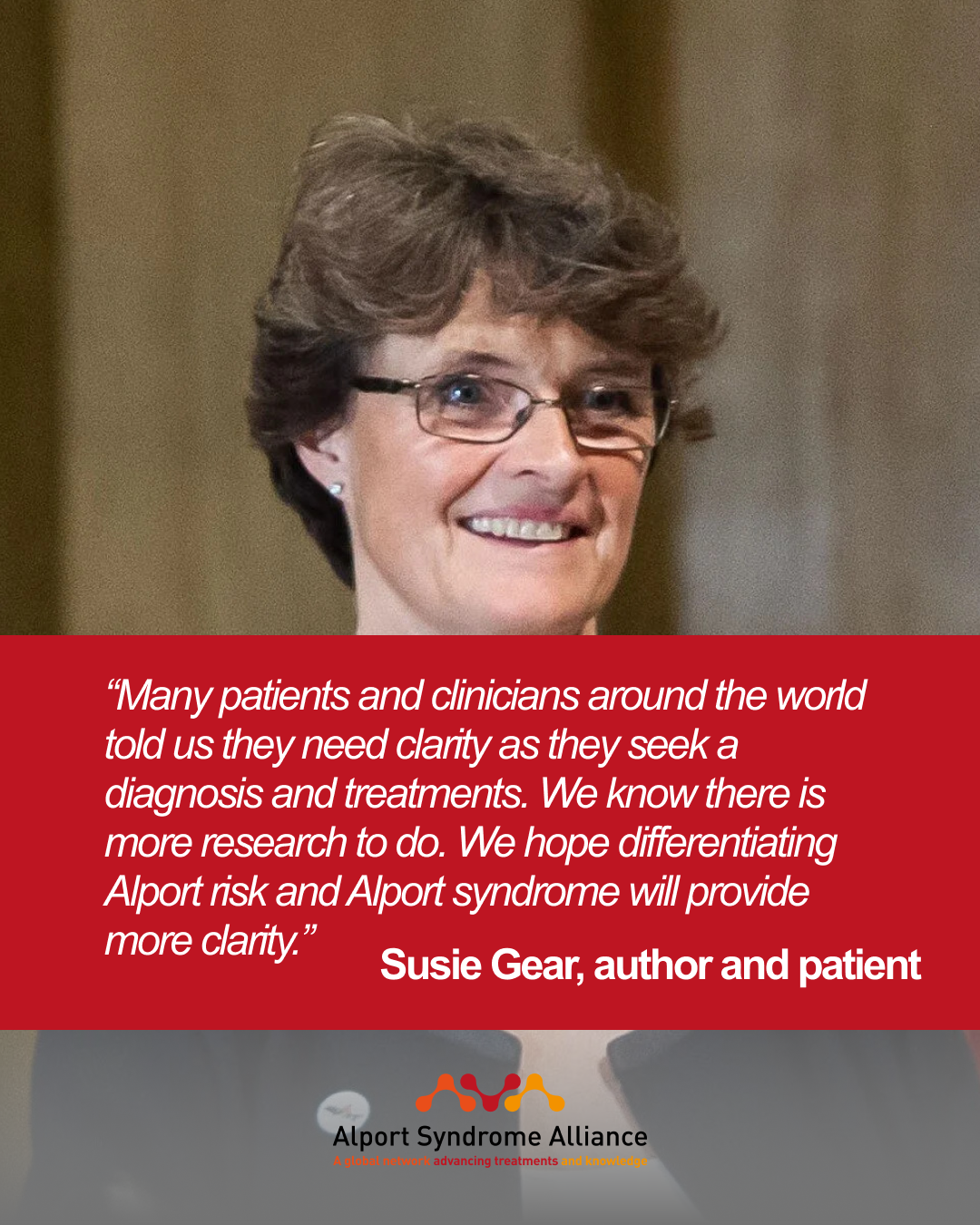
‘Alport risk’ refers to people who may have a milder form of Alport-related kidney disease, often with a lower risk of severe disease. Some may have had a positive genetic test result but have yet to present clinical features.
‘Alport syndrome’ refers to people who have — or are predicted to develop — more severe features, including progressive kidney disease, hearing loss, and eye changes.
The goal is to describe Alport in a way that better reflects the wide range of clinical features and outcomes across the Alport spectrum.
3) Higher prevalence
In the past, Alport syndrome was often considered a very rare condition. But advances in genetic testing are helping researchers identify more people with Alport variants — including people with mild signs who go undiagnosed their whole life.
For example, researchers have found that a disease-causing variant in COL4A3 or COL4A4 is present in at least 1 in 100 people.
4) The importance of early diagnosis
The paper highlights the importance of identifying Alport-related conditions
as early as possible.
Earlier diagnosis can help people access:
- regular kidney monitoring
- hearing and eye checks
- specialist support
- treatments that may slow kidney disease progression
- healthier lifestyles to slow progression for those with Alport risk
This helps relatives to get an early diagnosis too.
5) The importance of early treatment
The paper highlights that early treatment may help slow the progression of kidney disease across the Alport spectrum.
Researchers point in particular to ACE inhibitors — medicines used to help protect the kidneys.
Starting treatment early can help people maintain kidney function for longer and may delay kidney failure, or even provide life-long protection for those with Alport risk.
Five years of global collaboration
This new naming proposal is not just the work of five authors.
It reflects 5 years of discussion and collaboration across the global Alport community – including patients, families, clinicians, researchers, and advocacy organisations.
To everyone involved: thank you!
And special thanks to the members of the Organising Committees of the international workshops on Alport syndrome.
Questions for the global community
Some points the global community could reflect upon:
- How does the proposed naming system reflect personal experience?
- How would it benefit patients globally?
- What concerns should we address going forward?
- What additional research is required?
- What would help diagnose people more effectively?
